Lecturers
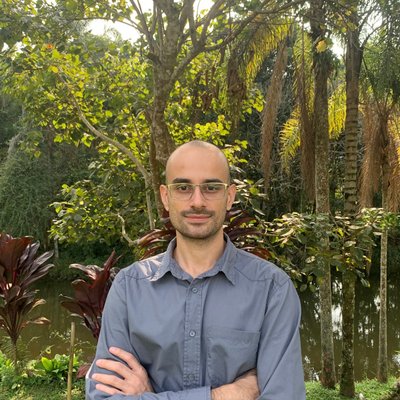 |
Renan GeraldesGroup Leader, Mechatronics and Precision Engineering Group, Brazilian Synchrotron Light Laboratory (LNLS/CNPEM), Brazil Renan Geraldes has a bachelor’s degree in Engineering Physics from the Federal University of São Carlos (UFSCar) in Brazil, a master’s degree in Physics with emphasis in Scientific Instrumentation from the Brazilian Center for Research in Physics (CBPF) in Brazil, and a PhD degree in Mechatronics from the Eindhoven University of Technology (TU/e) in the Netherlands. In 2010, he started as an intern in Mechanical Engineering at the Brazilian Synchrotron Light Laboratory (LNLS), where he remains to this date after occupying roles of Junior Engineer, Engineer, Senior Engineer and Specialist. He is currently the group leader of the Mechatronics and Precision Engineering (MEP) Group in the Division of Beamline Engineering (DEL). Since 2014, his main contributions have been in leading novel beamline instrumentation projects for the 4th-generation light source Sirius at the LNLS, including: the High-Dynamic Double-Crystal Monochromator (HD-DCM); a family of exactly-constrained X-ray mirror systems; multi-modal X-ray nanoprobes; and, more recently, beamline end-stations compatible with maximum biological containment for the Orion Project at the Brazilian Center for Research in Energy and Materials (CNPEM). Over the last decade, he presented regular contributions at conferences in the synchrotron community, mainly in: the Mechanical Engineering Design of Synchrotron Radiation Equipment and Instrumentation (MEDSI), the International Conference on Synchrotron Radiation Instrumentation (SRI), the International Conference on Accelerator and Large Experimental Physics Control Systems (ICALEPCS), and the International Conference on X-ray Microscopy (XRM). He also regularly participated in conferences of the American Society for Precision Engineering (ASPE), the European Society for Precision Engineering and Nanotechnology (EUSPEN), and the Dutch Society for Precision Engineering (DSPE), in a permanent effort to bring industrial and synchrotron engineering tools and technologies more closely together. |
 |
Simon AlcockPrincipal Metrology Scientist, Optics & Metrology Group, Diamond Light Source, United Kingdom After completion of a Physics degree and PhD in X-ray surface diffraction at the University of Leicester, UK, Simon joined Diamond in 2003. He provided scientific and organisational support to the Directorate at Diamond for around three years, before joining the Optics & Metrology Group in 2006 as a Metrology Scientist. For over 20 years, Simon has built, equipped, and managed the Optics Metrology Lab (OML) and Precision Metrology Lab (PML). He has experience in designing, fabricating, and metrology testing of X-ray optics, and practical knowledge of clamping, cooling, and installation on synchrotron and XFEL beamlines. In conjunction, he has developed the expertise and instrumentation to accurately characterise micro- and nano-positioning stages, which precisely manipulate beamline optics, samples, and detectors. He works closely with Engineering colleagues to develop ultra-stable motion stages and environmental enclosures to shield sensitive devices from noise and vibrations. With over 100 peer-reviewed scientific papers on X-ray optics and nano-metrology, Simon has a passion for creating next-generation metrology instruments and techniques, and works closely with National Metrology Institutes, industry, and light sources around the world. He regularly participates at international conferences and community outreach to educate the public about synchrotron science and inspire early-career scientists and engineers. Selected recent publications:
|
 |
Takashi TanakaGroup Director, Advanced X-ray Laser Group, RIKEN SPring-8 Center, Japan Takashi Tanaka is the Group Director of the Advanced X-ray Laser Group at the RIKEN SPring-8 Center. He received a Ph.D. in Engineering from Kyoto University in 1996, and has been working on the development of insertion devices at SPring-8 and SACLA since then. Besides the technical development, he has also conducted theoretical studies on synchrotron radiation and free-electron laser physics, and developed the computer codes SPECTRA and SIMPLEX for the numerical characterization of SR and FEL. |
 |
Sushil SharmaSenior Adviser, Accelerator Systems Division, NSLS-II, Brookhaven National Laboratory, USA Sushil Sharma is a senior adviser in the Accelerator Systems Division of NSLS-II at Brookhaven National Laboratory (BNL), where he leads several R&D projects for the facility’s future upgrade. Previously, he served as the mechanical engineering group leader at both NSLS-II and the Advanced Photon Source (APS) at Argonne National Laboratory (ANL). In these roles, he was responsible for the design and construction of various storage ring mechanical systems, including magnets, girder supports, thermal absorbers, front ends, and utilities. Dr. Sharma also co-founded the Mechanical Engineering Design of Synchrotron Radiation Equipment and Instrumentation (MEDSI) international conference, establishing a global forum for mechanical engineers working in light sources. He is a recipient of distinguished service awards from both BNL and ANL, and he holds a Ph.D. in Theoretical and Applied Mechanics from the University of Illinois. |
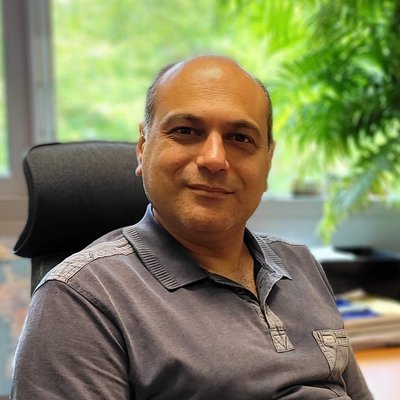 |
Keihan TavakoliHead of the Mechanical Engineering Group, Synchrotron SOLEIL, France Keihan Tavakoli joined Synchrotron SOLEIL in 2003 as a mechanical engineer, contributing to the design and development of numerous accelerator components, including superconducting RF cavities and most of the facility’s insertion devices, such as in-vacuum, APPLE-II and cryogenic undulators. Appointed Deputy Head of the Mechanical Engineering Group in 2016 and Head of the Group in 2020, he has since led engineering activities supporting the operation and future development of the facility. Keihan is specialized in accelerator technologies, and he is actively involved in the design of the SOLEIL upgrade program (SOLEIL II). He also serves as Scientific Program Chair of the MEDSI International Organizing Committee. |
 |
Nick GazisGroup Leader, Mechanical Engineering, Technology & Analysis (META) Group, European Spallation Source (ESS), Sweden Dr. Eng. Nick Gazis is the Group Leader of the Mechanical Engineering, Technology & Analysis (META) Group and Head of the Mechanical Measurements Laboratory (MML) at the European Spallation Source (ESS), as well as Engineering Work Package Manager for the ESSnuSB+ neutrino upgrade project. He holds an MSc in Mechanical & Aeronautics Engineering and a double PhD in particle accelerator technology and applied physics from the Université Grenoble Alpes (UGA) in France and the National Technical University of Athens (NTUA) in Greece. He started his career at the Laboratory of Applied Mechanics and Reliability Analysis (LMAF) at the Swiss Federal Institute of Technology in Lausanne (EPFL), and then moved to the European Organization for Nuclear Research (CERN), working on the CMS detector, the LHC and SPS accelerators, and the CLIC study. Later, he joined the European Spallation Source (ESS) as Engineering Integration Leader and then Accelerator Installation Manager, before moving to the central engineering division to form and lead mechanical engineering at the ESS-wide level. His areas of expertise are mechanical and materials engineering, design, standardization and tolerancing, NDT studies, and scientific project management. |
 |
Michela SemeraroSenior Mechanical Project Engineer, Diamond Light Source, United Kingdom Michela Semeraro is a Senior Mechanical Project Engineer at Diamond Light Source with over a decade of specialized experience in international accelerator facilities. Her career began at CERN in 2014, followed by positions at the Australian Synchrotron in 2019, and joining Diamond Light Source in 2024. Over the past five years, she has expanded her technical expertise into engineering management, currently leading a team of five engineers. This dual perspective enables her to address both the complex mechanical design challenges and the strategic project coordination required in modern synchrotron facilities. Michela is actively committed to professional mentorship and advancing diversity within the engineering community. |
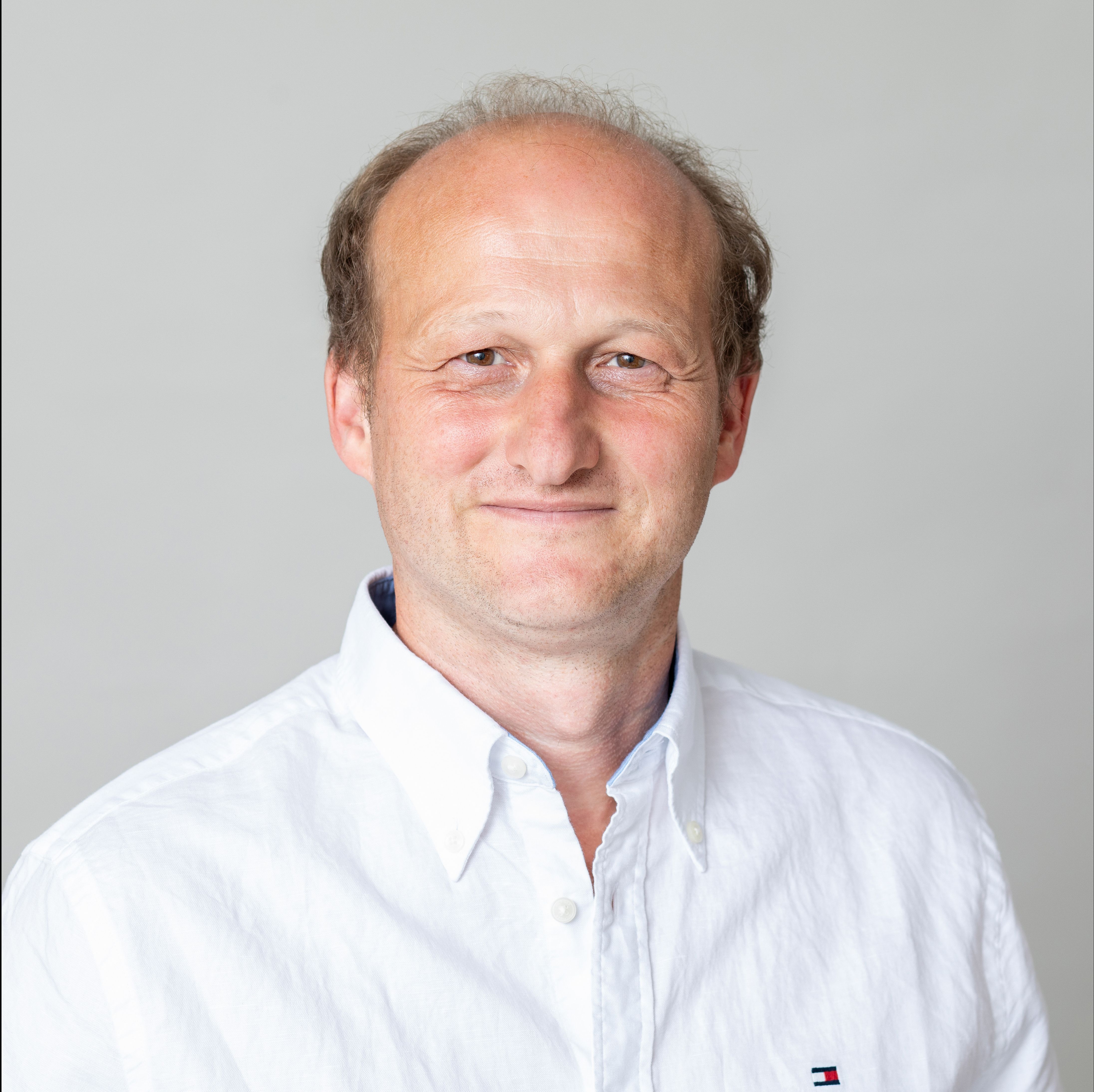 |
Roland PlatzerSenior Civil Engineer (Statics/Dynamics), ZM1 Engineering Design Group, DESY, Germany Roland Platzer is a qualified civil engineer with a specialisation in statics/dynamics, and has extensive experience in vibration analysis and dynamic structural systems. Since 2009, he has been employed at DESY (Deutsches Elektronen-Synchrotron) in the Engineering and Design Division (ZM1), with a particular focus on the analysis of vibration-related challenges. From 2011 to 2014, he played a key role in the stability analyses for the European XFEL, particularly in developing vibration-optimised magnet supports as suspended structures within the main linac tunnel. From 2014 onwards, he has specialised in in-house vibration measurements and advisory services for engineers on vibration-related topics. Furthermore, since 2016, he has been involved in the development of modular, vibration-optimised positioning units (with up to six degrees of freedom) designed for flexible applications. He is currently a member of the ‘Vibrations and Stability’ working group for PETRA IV and is responsible for the vibration and stability analyses of the experimental floor in the new PETRA West Hall (PXW). His commitment to continuous professional development is evident through his participation in events such as the HGL Dynamics Vibration Seminar (Berlin, 2012) and the VDI Building Dynamics Conference (Würzburg, 2025). Since 2009, he has provided consulting services during the conceptual and engineering phases of the Cherenkov Telescope Array (CTA). His professional portfolio includes static and dynamic analyses, incorporating seismic investigations, for the Mid-Size Telescope (MST). |